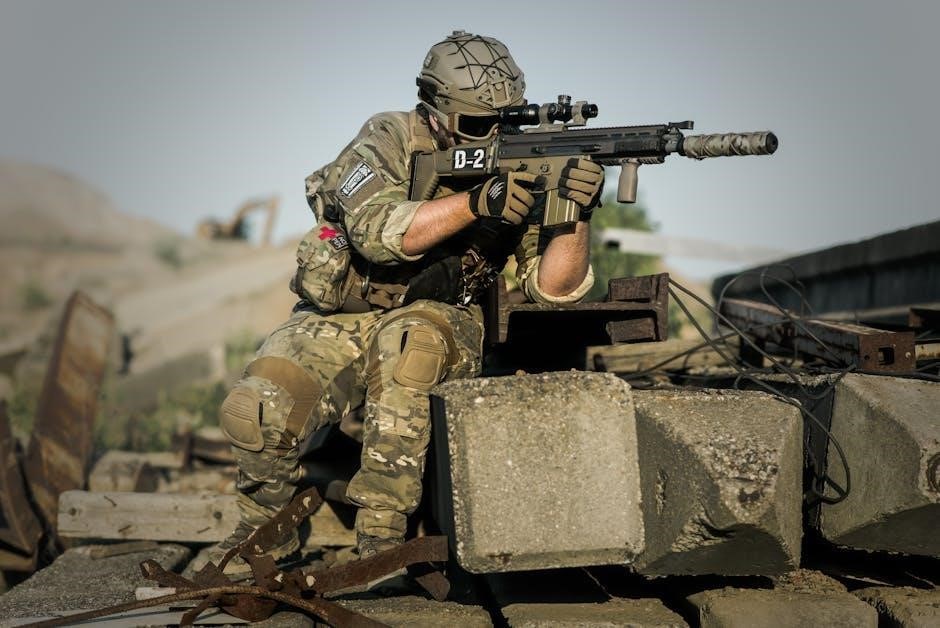
Cade Courtley, a distinguished former Navy SEAL, authored this essential guide, offering practical, step-by-step instructions for surviving diverse, life-threatening scenarios.
This book is highly recommended for anyone interested in survival, extending beyond extreme situations to everyday preparedness, providing invaluable knowledge.
Courtley’s expertise delivers a comprehensive resource, equipping readers with the skills to navigate challenges and enhance their resilience in any crisis.
The Author: Cade Courtley’s Background
Cade Courtley distinguishes himself as a former Navy SEAL and highly trained sniper, bringing a wealth of real-world experience to the realm of survival instruction. His background isn’t rooted in theoretical speculation, but in the practical demands of elite military service.
Courtley’s expertise extends beyond combat skills; he’s a seasoned survivalist, deeply knowledgeable in wilderness techniques and disaster preparedness. This unique combination informs his approach, offering readers actionable advice grounded in both tactical proficiency and pragmatic resourcefulness. He authored the SEAL Survival Guide.
The Core Philosophy of the Guide
The SEAL Survival Guide’s central tenet revolves around proactive preparedness and empowering individuals to take control in chaotic situations. It emphasizes that survival isn’t about luck, but about knowledge, skill, and a determined mindset.
Cade Courtley advocates for a holistic approach, covering everything from immediate threat response – like active shooter scenarios – to long-term disaster resilience. The guide prioritizes self-reliance, urging readers to move beyond waiting for assistance and become their own first responders.
Understanding Survival Priorities
Cade Courtley’s guide stresses prioritizing needs for survival: air, shelter, water, and food – the “Rule of Threes.” Situational awareness is paramount, forming a crucial first defense.
The Rule of Threes (Air, Shelter, Water, Food)
Cade Courtley emphasizes the critical “Rule of Threes” as a foundational survival principle. A person can survive approximately three minutes without air, three hours without shelter in harsh conditions, three days without water, and three weeks without food.
This hierarchy dictates immediate action; securing breathable air and protection from the elements are paramount. Prioritizing water procurement follows, then focusing on finding sustainable food sources.
Understanding these time constraints, as detailed in the SEAL Survival Guide, allows for focused effort and maximizes chances of survival in any disaster scenario.
Situational Awareness: The First Line of Defense
Cade Courtley stresses that heightened situational awareness is the most crucial survival skill, acting as the initial defense against threats. This involves constantly observing your surroundings, identifying potential dangers, and assessing escape routes.
The SEAL Survival Guide advocates for a proactive mindset, scanning for anomalies and recognizing pre-incident indicators.
Developing this skill—noticing details others miss—can prevent becoming a victim, enabling swift, informed decisions in rapidly evolving, dangerous circumstances, ultimately increasing survivability.
Mental Fortitude and the Survival Mindset
Cade Courtley’s SEAL Survival Guide emphasizes that a resilient mindset is paramount; physical skills alone aren’t enough. Cultivating mental toughness involves accepting discomfort, controlling fear, and maintaining a positive outlook even in dire situations.
The guide promotes proactive problem-solving and adaptability, crucial for overcoming unexpected obstacles.
Developing unwavering determination, coupled with a refusal to surrender, significantly increases the chances of survival, transforming challenges into opportunities for resilience and resourcefulness.
Essential Survival Skills Detailed in the Guide
Cade Courtley’s guide meticulously details critical skills: shelter building, water procurement, fire starting, and food acquisition—vital for thriving in adverse conditions.
Shelter Building Techniques
Cade Courtley emphasizes constructing shelters for protection from the elements, prioritizing readily available materials and efficient designs. The SEAL Survival Guide doesn’t focus on elaborate structures, but practical, quickly built options.
Techniques include lean-tos utilizing natural features, debris huts for insulation, and utilizing camouflage for concealment. Courtley stresses adapting shelter construction to the specific environment, considering factors like climate, terrain, and available resources.
He highlights the importance of insulation against cold and moisture, and the need for a shelter that provides both physical and psychological security during a survival situation.
Water Procurement and Purification Methods
Cade Courtley’s SEAL Survival Guide dedicates significant attention to water, recognizing its critical importance. He details locating water sources – from rainfall collection to finding groundwater – and emphasizes purification is non-negotiable.
Methods include boiling, utilizing improvised filters with charcoal and sand, and employing purification tablets when available. Courtley stresses understanding potential contamination risks and selecting the most effective purification method based on available resources.
He warns against drinking untreated water, highlighting the dangers of waterborne illnesses and the necessity of prioritizing safe hydration in any survival scenario.
Fire Starting in Various Conditions
Cade Courtley’s guide emphasizes mastering fire-starting, a cornerstone of survival. He doesn’t rely on a single method, recognizing environmental challenges. Techniques range from traditional matches and lighters to friction-based methods like bow drills and hand drills.
Courtley details preparing tinder – crucial for catching a spark – and building a sustainable fire structure. He stresses adapting to wet conditions, utilizing natural shelters, and conserving resources.
The guide highlights fire’s multifaceted benefits: warmth, cooking, water purification, signaling, and psychological comfort, making it an essential skill.
Food Acquisition: Foraging and Trapping
Cade Courtley stresses that prolonged survival necessitates finding food sources. His guide details identifying edible plants – cautioning against misidentification – and safe foraging practices. He emphasizes understanding local flora and potential dangers.
Beyond foraging, the book covers constructing basic traps for small game, focusing on snare designs and placement. Courtley highlights resourcefulness, utilizing available materials for effective trapping.
He underscores the importance of conserving energy during food acquisition and prioritizing sustainable practices for long-term survival.

Navigating and Signaling for Help
Cade Courtley’s guide emphasizes land navigation without relying on technology, utilizing map reading and natural indicators. Effective distress signals, increasing rescue chances, are also detailed.
Land Navigation Without Technology
Cade Courtley’s SEAL Survival Guide stresses the critical skill of navigating without modern tools, a cornerstone of self-reliance in a disaster. The guide details utilizing natural indicators – sun, stars, terrain features – for direction.
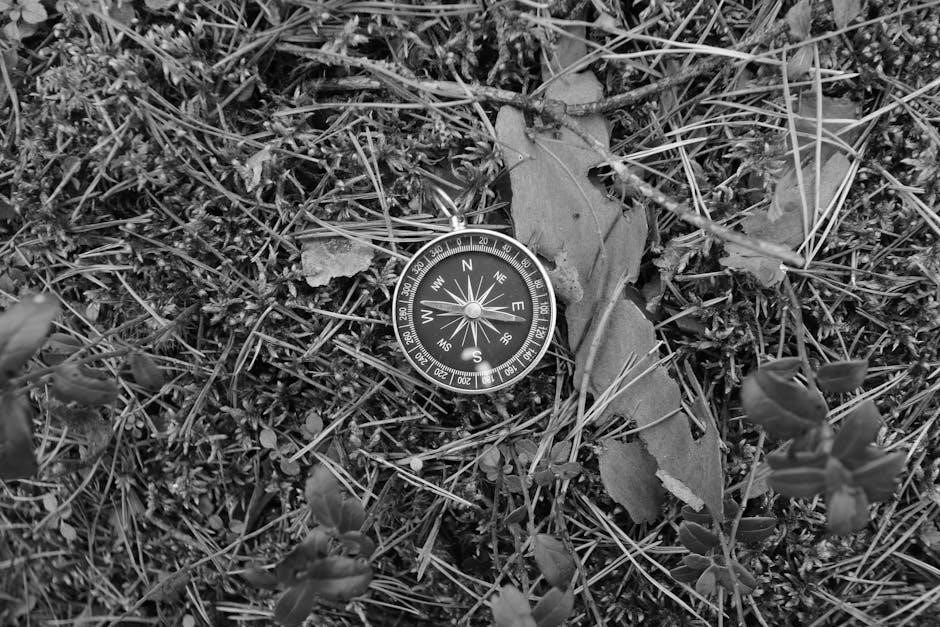
Understanding how to create and use a makeshift compass is paramount, alongside mastering pace counting to accurately estimate distances traveled. Courtley emphasizes observing the environment, recognizing patterns, and developing a strong mental map.
This skillset allows individuals to confidently traverse unfamiliar landscapes, locate resources, and ultimately, increase their chances of reaching safety when technology fails or is unavailable.
Creating Effective Distress Signals
Cade Courtley’s SEAL Survival Guide highlights the importance of signaling for rescue, emphasizing visibility and recognizability. The guide details constructing large ground-to-air signals using contrasting materials – rocks, branches, clothing – forming universally understood symbols like SOS.
Utilizing mirrors for reflecting sunlight, creating smoke signals with controlled fires, and employing brightly colored fabrics are also covered. Courtley stresses redundancy; employing multiple signaling methods increases the likelihood of detection.
Understanding signal flares and their proper usage is crucial, alongside knowing how to maximize visibility in diverse terrains and weather conditions.
Understanding Map Reading Basics
Cade Courtley’s SEAL Survival Guide emphasizes that land navigation without technology relies heavily on map reading proficiency. The guide details understanding topographic maps, including contour lines representing elevation changes, and interpreting map symbols denoting features like rivers, forests, and buildings;
Courtley stresses the importance of orienting the map with a compass, determining your location, and plotting a course.
He explains declination adjustments and techniques for pacing to estimate distances accurately, crucial skills for effective movement and avoiding getting lost in unfamiliar terrain.
Self-Defense and Security
Cade Courtley’s guide covers improvised weapons, defensive tactics, and threat assessment, emphasizing situational awareness as a primary defense against potential dangers and attacks.
Improvised Weapons and Defensive Tactics
Cade Courtley’s SEAL Survival Guide doesn’t solely rely on specialized tools; it emphasizes resourcefulness in creating defensive implements from the surrounding environment; The guide details how everyday objects can be transformed into effective weapons for self-protection when conventional options are unavailable.
Beyond weaponry, Courtley stresses practical defensive tactics, focusing on utilizing surroundings for cover and employing simple, yet effective, maneuvers to deter or neutralize threats. This section prioritizes awareness and proactive measures, empowering individuals to respond decisively in dangerous encounters, maximizing their chances of survival.
Situational Awareness and Threat Assessment
Cade Courtley’s SEAL Survival Guide fundamentally prioritizes situational awareness as a primary defense mechanism. He emphasizes constantly scanning your surroundings, identifying potential threats, and recognizing subtle changes in the environment that could indicate danger.
The guide details methods for quickly assessing risks, evaluating escape routes, and understanding human behavior to predict potential hostile actions. Courtley advocates for proactive observation, enabling individuals to anticipate and avoid dangerous situations, rather than reacting after a threat materializes, bolstering overall survival prospects.
Home Security Measures
Cade Courtley’s SEAL Survival Guide extends preparedness to the home front, advocating for layered security. He stresses reinforcing entry points – doors and windows – and establishing clear lines of sight around the property.
The guide details creating a defensible space, utilizing alarms and lighting, and developing a family emergency plan. Courtley emphasizes the importance of knowing your neighbors and establishing a community watch, fostering collective security. Proactive measures, he argues, deter potential threats and enhance survival capabilities.
Medical Preparedness and First Aid
Cade Courtley’s guide prioritizes a comprehensive first aid kit and training. It covers treating injuries, illnesses, and managing trauma, crucial for self-reliance in crises.
Building a Comprehensive First Aid Kit
Cade Courtley emphasizes a well-stocked first aid kit as foundational for survival. Beyond standard bandages, include trauma dressings, tourniquets, and antiseptic wipes for serious wounds.
Pain relievers, anti-diarrheal medication, and blister treatment are vital. Don’t forget items for burns, splints for fractures, and a CPR mask for safe resuscitation.
Consider including medications for allergies and pre-existing conditions. Regularly check expiration dates and replenish supplies to ensure readiness when seconds count in emergencies.
Treating Common Injuries and Illnesses
Cade Courtley’s guide details treating injuries like cuts, burns, sprains, and fractures using improvised materials when professional care is unavailable. He stresses controlling bleeding with direct pressure and tourniquets when necessary;
For burns, cool water application is crucial, followed by sterile dressings. Recognizing and addressing shock is paramount, alongside managing dehydration through oral rehydration solutions.
The guide also covers identifying and treating common illnesses, emphasizing prevention through hygiene and water purification techniques, vital for maintaining health in austere environments.
Dealing with Trauma and Shock
Cade Courtley emphasizes that recognizing and addressing trauma and shock are critical survival skills. He details methods for calming oneself and others, focusing on deep breathing and positive self-talk to manage psychological stress.
Physically, the guide instructs keeping the casualty warm, elevating legs, and providing reassurance. Recognizing shock symptoms – pale skin, rapid pulse – is vital for prompt intervention.
Courtley stresses maintaining composure, as panic exacerbates both physical and emotional trauma, hindering effective survival efforts in challenging situations.

Specific Disaster Scenarios Addressed
Cade Courtley’s guide prepares individuals for diverse crises, including active shooter events, natural disasters like hurricanes and earthquakes, and navigating complex urban survival situations.
Surviving Active Shooter Situations
Cade Courtley’s SEAL Survival Guide directly addresses the terrifying reality of active shooter events, offering crucial strategies for maximizing survival chances. The guide emphasizes immediate action, prioritizing awareness of surroundings and identifying potential escape routes.
It details the “Run, Hide, Fight” methodology, advocating for evasion as the primary response, followed by secure concealment if escape isn’t possible. As a last resort, the guide provides guidance on improvised weapons and aggressive defensive tactics, stressing the importance of decisive action to neutralize the threat and increase the odds of survival.
Preparing for Natural Disasters (Hurricanes, Earthquakes)
Cade Courtley’s guide provides detailed preparation strategies for natural disasters like hurricanes and earthquakes, emphasizing proactive measures before, during, and after the event. It stresses the importance of a well-stocked “bug-out bag” with essential supplies, including food, water, first aid, and communication tools.
The SEAL Survival Guide outlines securing shelter, identifying safe zones, and establishing emergency communication plans. Courtley advocates for understanding local risks and developing a family disaster plan, ensuring preparedness and increasing resilience when facing the unpredictable forces of nature.
Urban Survival Strategies
Cade Courtley’s SEAL Survival Guide addresses the unique challenges of surviving in urban environments, focusing on situational awareness and threat assessment amidst densely populated areas. It details strategies for navigating chaotic situations, securing resources, and avoiding potential dangers within a city.
The guide emphasizes the importance of knowing your surroundings, identifying escape routes, and utilizing improvised tools for self-defense. Courtley highlights the need for adaptability and resourcefulness, preparing individuals to overcome obstacles and maintain safety during urban crises.
Gear and Equipment Recommendations
Cade Courtley stresses the importance of a well-stocked “bug-out bag” with essential items, including a durable survival knife, and reliable clothing for preparedness.
Prioritizing quality gear ensures resilience during emergencies, enhancing survival capabilities in diverse scenarios.
Essential Items for a Bug-Out Bag
Cade Courtley’s SEAL Survival Guide emphasizes a meticulously prepared bug-out bag as crucial for immediate evacuation. This bag should contain essential supplies for at least 72 hours of self-sufficiency.
Key items include a high-quality knife, water purification tablets or a filter, a fire starter (waterproof matches and a ferro rod), a first-aid kit, durable shelter materials like a tarp, and non-perishable food.
Navigation tools – a map and compass – are vital, alongside a signaling device like a whistle. Don’t forget extra clothing, a headlamp with batteries, and personal hygiene items. Prioritize lightweight, multi-purpose gear for optimal portability and functionality.
Choosing the Right Survival Knife
Cade Courtley, in his SEAL Survival Guide, stresses the survival knife’s importance as a multi-tool, not merely a weapon. He advocates for a full-tang, fixed-blade knife constructed from high-carbon steel for durability and strength.
Blade length should be between four and seven inches, offering versatility for tasks like shelter building, fire preparation, and food processing. A comfortable, secure grip is paramount, even in wet or adverse conditions.
Consider a sheath that allows for multiple carry options. Prioritize quality over cost; a reliable knife can be the difference between survival and hardship in a critical situation.
Importance of Durable Clothing and Footwear
Cade Courtley’s SEAL Survival Guide emphasizes that appropriate clothing and footwear are foundational for survival, regulating body temperature and protecting against the elements. Layering is key, utilizing moisture-wicking base layers, insulating mid-layers, and waterproof/windproof outer shells.
Footwear must be sturdy, broken-in boots offering ankle support and traction. Avoid cotton, favoring synthetic materials or merino wool for their quick-drying properties.
Prioritize durability and functionality over fashion; your clothing and boots are vital equipment, impacting your ability to endure harsh conditions and navigate challenging terrain.
Advanced Survival Techniques
Cade Courtley’s guide delves into advanced skills like sophisticated fire-starting, complex shelter construction, and comprehensive wilderness first aid for prolonged survival.
These techniques demand significant practice and a deep understanding of environmental factors.
Advanced Fire Starting Methods
Cade Courtley’s SEAL Survival Guide extends beyond basic fire-starting, detailing techniques for challenging conditions. He emphasizes utilizing ferrocerium rods effectively, creating tinder bundles from various natural materials, and employing friction-based methods like the bow drill.
The guide stresses mastering these skills through dedicated practice, understanding wood types for optimal burning, and protecting the flame from wind and moisture. Courtley highlights the importance of redundancy, carrying multiple fire-starting tools, and knowing how to improvise when primary methods fail, ensuring a reliable heat source in critical situations.
Advanced Shelter Construction
Cade Courtley’s SEAL Survival Guide details shelter building beyond simple lean-tos, focusing on maximizing protection and insulation. He advocates for debris huts, utilizing natural materials for camouflage and warmth, and constructing snow caves for extreme cold weather survival.
The guide emphasizes site selection, considering wind direction and potential hazards. Courtley stresses reinforcing structures for stability, creating effective drainage systems, and incorporating features like fire reflectors for increased heat retention, ensuring a secure and comfortable refuge in harsh environments.
Wilderness First Aid
Cade Courtley’s SEAL Survival Guide extends first aid beyond basic bandaging, emphasizing improvised solutions when conventional supplies are limited. He details treating trauma and shock, utilizing pressure points and splinting techniques with natural materials.
The guide stresses recognizing and addressing hypothermia and hyperthermia, alongside wound care to prevent infection. Courtley highlights the importance of preventative measures, sanitation, and resourcefulness in providing critical medical attention in remote locations, maximizing survival chances.
The Importance of Training and Practice
Cade Courtley emphasizes regular skill drills and simulations for preparedness. Physical fitness and mental preparation are crucial, alongside stress management, to effectively respond to crises.
Regular Skill Drills and Simulations
Cade Courtley’s SEAL Survival Guide doesn’t just present information; it stresses consistent practice. Theoretical knowledge is insufficient without repeated application, building muscle memory and reinforcing crucial skills.
Simulations, mirroring real-world scenarios, are vital for testing preparedness and identifying weaknesses. Regularly practicing fire starting, shelter building, and first aid builds confidence and competence.
These drills should be varied and challenging, pushing individuals beyond their comfort zones. Consistent training transforms survival techniques from abstract concepts into instinctive reactions, increasing the likelihood of success when facing genuine emergencies.
Physical Fitness for Survival
Cade Courtley’s SEAL Survival Guide emphasizes that survival isn’t solely about skills; it demands physical endurance. A robust fitness level significantly increases your chances of overcoming challenges in demanding environments.
Strength, stamina, and agility are paramount for tasks like shelter construction, foraging, and evading threats. Regular exercise prepares the body for prolonged exertion and reduces the risk of injury.
Focus on cardiovascular fitness, strength training, and flexibility. Maintaining physical conditioning isn’t merely about peak performance; it’s about having the reserves to endure when everything else fails.
Mental Preparation and Stress Management
Cade Courtley’s guide underscores the critical role of mental fortitude in survival situations. The ability to remain calm, focused, and decisive under immense pressure is often the deciding factor between success and failure.
Cultivate a resilient mindset through visualization, scenario planning, and stress inoculation techniques. Practice controlling your emotional responses and maintaining a positive outlook, even when facing adversity;
Recognize that fear and panic are natural reactions, but learn to manage them effectively. Mental preparation is as vital as physical conditioning, equipping you to navigate the psychological challenges of survival.
Criticisms and Limitations of the Guide
Cade Courtley’s guide, while valuable, faces critique regarding realism versus “Hollywood” survival myths, emphasizing the necessity of adapting techniques to specific environments.
Local knowledge is paramount.
Realism vs. Hollywood Survival Myths
Cade Courtley’s SEAL Survival Guide strives for practicality, yet faces the challenge of separating genuine survival skills from popularized, often unrealistic, depictions found in film and television.
The guide actively counters these “Hollywood” myths, focusing on achievable techniques and acknowledging the complexities of real-world survival scenarios.
Courtley emphasizes that survival isn’t about heroic feats, but about calculated decisions, resourcefulness, and mitigating risks – a grounded approach crucial for effective preparedness.
This distinction is vital, as relying on fictionalized survival methods can prove dangerous and counterproductive in a genuine crisis.
The Importance of Local Knowledge
Cade Courtley’s SEAL Survival Guide, while comprehensive, implicitly acknowledges the critical role of adapting techniques to specific environments and geographical locations.
The guide provides foundational skills, but stresses that true preparedness requires understanding the unique challenges and resources of one’s immediate surroundings.
Local knowledge – including edible plants, water sources, potential hazards, and weather patterns – significantly enhances survival prospects.
Generic survival strategies must be tailored to the local context for maximum effectiveness, a point implicitly underscored throughout the book’s teachings.
Adapting Techniques to Specific Environments
Cade Courtley’s SEAL Survival Guide emphasizes that rigid adherence to any single survival method is often ineffective; adaptability is paramount.
The book’s principles must be modified based on climate, terrain, and available resources – a desert survival strategy differs drastically from a forest one.
Understanding microclimates, seasonal changes, and local ecosystems is crucial for successful implementation of the guide’s teachings.
Effective survival hinges on creatively applying core skills to the unique demands of each environment, maximizing resourcefulness and minimizing risk.
Resources and Further Learning
Cade Courtley’s guide inspires continued learning through recommended books, websites, and hands-on survival training courses for enhanced preparedness.
Engage with online communities and forums to share knowledge and refine skills, fostering a network of resilient individuals.
Recommended Books and Websites
Cade Courtley’s SEAL Survival Guide serves as a foundational text, but expanding your knowledge base is crucial. Explore additional resources focusing on wilderness medicine, advanced first aid, and specific regional survival techniques.
Websites dedicated to bushcraft, prepping, and emergency preparedness offer valuable insights and practical tips. Consider resources from reputable survival experts and organizations. Remember to critically evaluate information and prioritize skills applicable to your environment. Continuously learning and adapting is key to effective survival readiness.
Survival Training Courses
While Cade Courtley’s guide provides a strong foundation, hands-on training significantly enhances preparedness. Seek courses covering wilderness survival, first aid/CPR, self-defense, and land navigation.
Look for reputable organizations offering realistic scenarios and experienced instructors. Consider courses tailored to specific environments – urban, wilderness, or disaster-specific. Practical application solidifies theoretical knowledge, building confidence and muscle memory. Investing in professional training complements self-study and maximizes survival skills.
Online Communities and Forums
Engaging with online communities dedicated to survivalism expands learning beyond Cade Courtley’s guide. Forums and online groups offer platforms to exchange knowledge, ask questions, and share experiences with like-minded individuals.
These spaces facilitate discussions on gear, techniques, and local preparedness strategies. Be discerning, verifying information and prioritizing credible sources. Active participation fosters a collaborative learning environment, enhancing skills and building a network of support for any potential crisis.